Section 232 tariffs do more than raise the price of imported steel: they change what American mills decide to build. The statute lets the president restrict imports that the Commerce Department deems a threat to national security, and since 2018 it has been the primary tool behind steel and aluminum tariffs of 25% and higher. After the Supreme Court ruled in February 2026 that a different statute, the International Emergency Economic Powers Act, cannot be used for tariffs at all, Section 232 became the load-bearing authority for metals protection — and manufacturers now watch its proclamations the way energy companies watch drilling permits.
What does Section 232 actually authorize?
The Trade Expansion Act of 1962, Section 232, allows the president to adjust imports without a vote in Congress when an investigation by the Commerce Department finds a national-security threat. The process is documentary: Commerce investigates, reports to the president, and the president either acts or explains in writing why not. There is no requirement for congressional approval, and the courts have historically deferred to the national-security finding. That combination — broad power, weak oversight — is why successive administrations have returned to it for steel, aluminum, and, more recently, other sectors. The Federal Register publishes every proclamation, and the effective dates bind customs treatment the day they take effect.
How do tariffs change mill investment decisions?
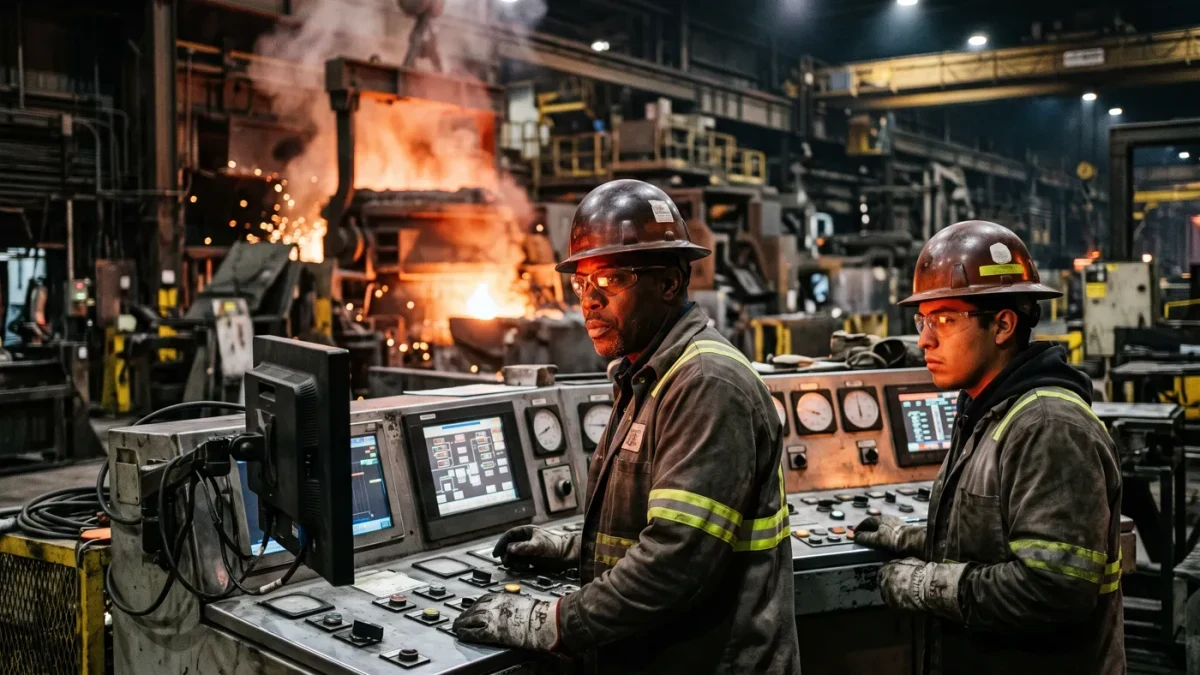
A steel mill is a decades-long bet. A new electric-arc furnace, which melts scrap rather than ore, costs hundreds of millions of dollars and takes years to permit and build, per industry analyses of announced projects. Tariffs raise the domestic price of steel — import duties push up the price floor — and higher prices improve the return on domestic capacity. The mechanism is not subtle: when imports cost 25% to 50% more at the border, domestic mills can charge more without losing orders, and margins fund expansion. The risk is symmetrical. If a proclamation is narrowed or repealed, the price support disappears mid-construction. Executives therefore price tariff persistence explicitly, and several have publicly described delaying final investment decisions until the legal picture settles.
Who gains and who pays downstream?
Steelmakers gain. Buyers of steel — automakers, appliance manufacturers, construction firms — pay. The typical pattern, documented in trade data since 2018, is that domestic prices rise by some fraction of the tariff and import volumes fall. Manufacturers that compete with imports sometimes benefit, because tariffed rivals' costs rise too. Manufacturers that export do not: they buy tariffed inputs at inflated domestic prices and sell into world markets at world prices. This is the long-running complaint from metal-using exporters, and it is why every Section 232 review triggers lobbying from both directions.
What did the 2025-2026 sequence change?
In 2025 the administration raised steel and aluminum tariffs to 50% for most countries. In 2026 it restructured the regime: a proclamation signed April 2, 2026 revised rates, scope, and administration for steel, aluminum, and copper effective April 6, 2026, per the White House and the Federal Register. A follow-up proclamation on June 1, 2026 — Proclamation 11032 — created a temporary framework running June 8, 2026 through December 31, 2027 that expands the list of products facing lower rates. The direction of travel matters more than any single rate: the regime is now granular, negotiated product by product, which rewards companies that can navigate the annexes and penalizes those that cannot.
What should a manufacturer watch next?
Three documents drive everything. First, the Federal Register proclamations themselves — rates, product lists in the annexes, and effective dates. Second, Commerce's Section 232 investigation dockets, which signal which sector is next; investigations into other industrial inputs have already been opened under this authority. Third, exclusion-request processes, which let importers petition for specific products to be exempted when domestic supply is inadequate. Exclusion windows are short and documentation-heavy, and firms that file early and precisely fare better than those that treat them as an afterthought. The broader lesson from eight years of Section 232 policy is that the details, not the headline rate, determine who wins.
Where does this leave capacity plans?
Domestic melting capacity has grown since 2018, but the additions have skewed toward the lower end of the product mix — commodity grades through electric-arc furnaces — while some high-grade specialty products still depend on imports that tariffs make expensive. That mismatch is the policy's unfinished business, and it is why each new proclamation adjusts product lists rather than simply raising numbers. For a plant operator, the working assumption for 2026 planning is that tariff support for commodity grades persists while specialty access depends on exclusions.
News ABC publishes information, not investment or procurement advice; readers making sourcing decisions should verify current rates in the Federal Register before acting.