Tariffs are not a dial the president turns. They are acts rooted in specific statutes, each with its own investigation, process, and limits — and the differences determine how fast a tariff arrives, how long it lasts, and who can challenge it. After the Supreme Court's February 2026 ruling that the International Emergency Economic Powers Act does not authorize tariffs at all, the statutory menu is the whole story. Here are the paths that remain, and how each one works.
Section 232: the national-security path
Section 232 of the Trade Expansion Act of 1962 lets the president adjust imports that Commerce finds threaten national security. The process starts with an investigation — self-initiated or petitioned — a report to the president, and then presidential action or a written decision not to act. There is no congressional vote. It is the authority behind the steel, aluminum, and copper tariffs, and the 2026 proclamations restructuring them. Its strength is durability; its constraint is that the national-security finding must be documented, and product coverage follows the investigation's scope.
Section 301: the unfair-trade path
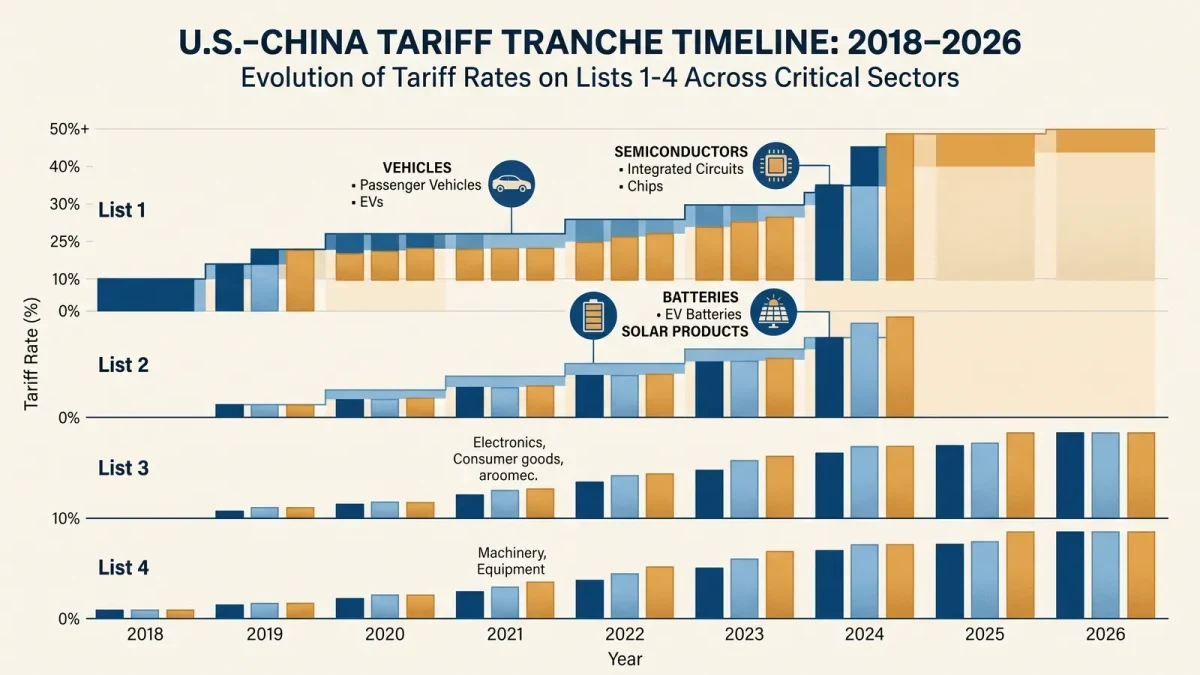
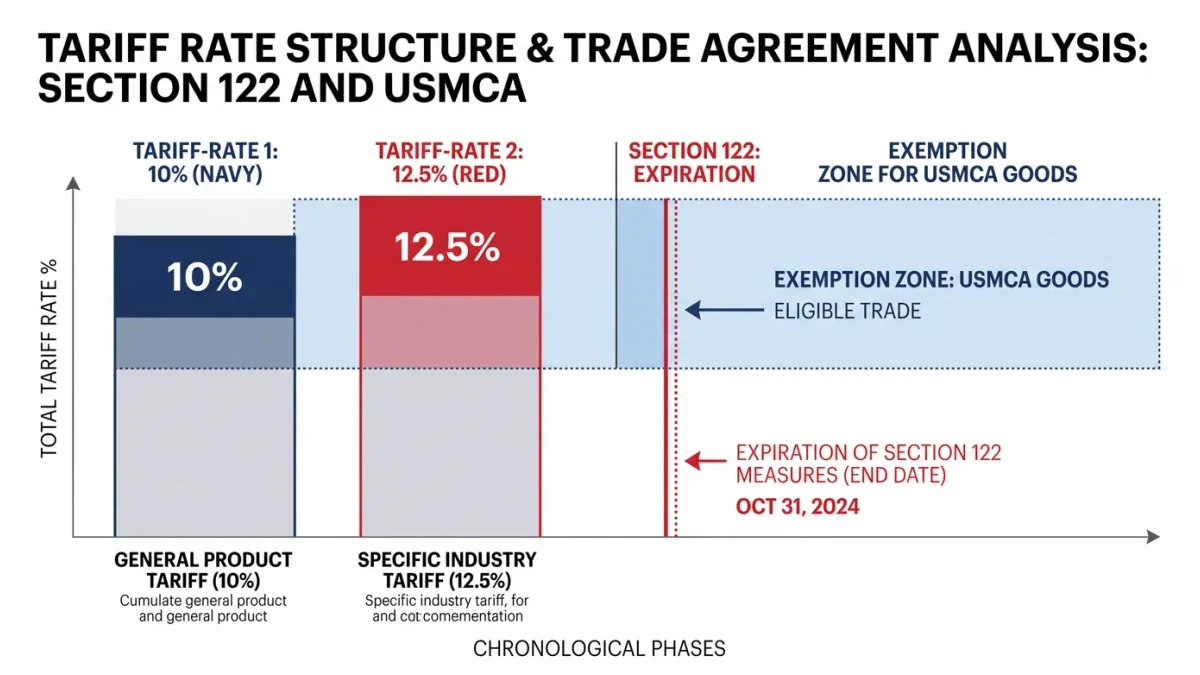
Section 301 of the Trade Act of 1974, enforced by the Office of the US Trade Representative, responds to foreign practices that violate trade agreements or burden US commerce — intellectual-property practices, forced technology transfer, and now broader categories. USTR investigates with public notice and comment, determines whether action is warranted, and may impose duties. It produced the China tariffs of 2018-2019 and the additional 10%-12.5% structure applied in 2026. Its rhythm is slower than 232 but its justification is economic rather than security-based, which makes it the natural vehicle for retaliation against specific practices.
Section 122 and the conventional paths
Section 122 of the Trade Act allows the president to impose temporary surcharges of up to 15% for balance-of-payments reasons, with a 150-day statutory ceiling absent congressional extension — a tool the administration used in 2025 for its baseline measures, per trade-law trackers. Around it sit the conventional paths: ordinary legislation (tariff bills passed by Congress), trade-remedy cases (antidumping and countervailing duties set by petition through Commerce and the International Trade Commission), and preferential-program changes. These are slower, more predictable, and harder to reverse — which is precisely the trade-off.
What did the IEEPA ruling remove?
The February 2026 decision, decided 6-3, held that IEEPA's power to "regulate importation" does not include imposing tariffs, invalidating the border and reciprocal tariffs issued under it in 2025; those tariffs were rescinded as of February 7, 2026, per the Congressional Research Service's summary. The ruling did not touch any other authority — which is why metals tariffs under 232 continued and new actions have moved to 301 and 122. The practical consequence is a speed limit: emergency-action speed is gone, and the remaining paths carry investigation, comment, and proclamation steps measured in weeks to months.
How do you track what is coming?
Three public dockets. The Federal Register publishes every proclamation and proposed rule, including tariff annexes. USTR's Section 301 docket lists investigations, hearing schedules, and action notices. Commerce's Bureau of Industry and Security and the International Trade Administration post initiation notices for investigations. A reader who checks those three sources sees every tariff in the pipeline before it takes effect — the same visibility importers' counsel sells for billable hours.
Where does Congress fit?
Constitutionally, tariff authority belongs to Congress, delegated in pieces to the executive over decades. The 2026 ruling re-ignited the debate over taking some of it back — trade-authority proposals circulate in every session — but any reclamation requires the same legislative arithmetic that has blocked it before. Until then, the statute you are standing on is the tariff you will get.