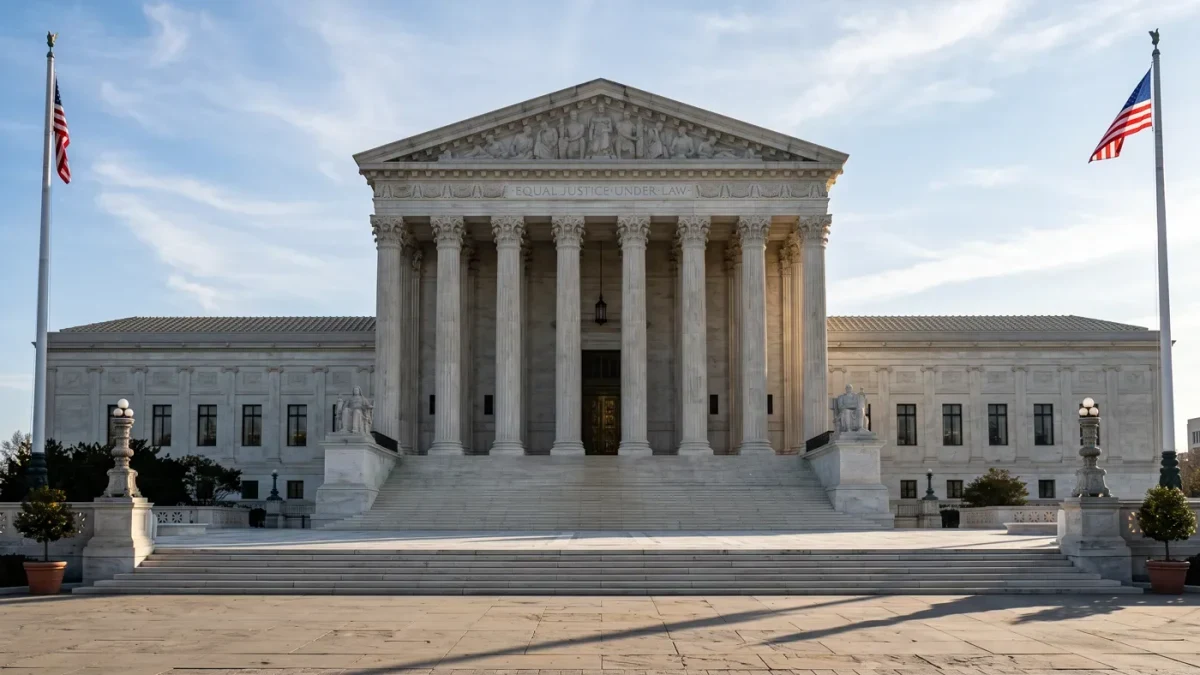
The Supreme Court ended the broadest tariff experiment in a generation. In a 6-3 decision issued in February 2026, the Court ruled that the International Emergency Economic Powers Act does not authorize the president to impose tariffs — invalidating the border-security tariffs on Canada, Mexico, and China and the global reciprocal tariffs issued under the statute in 2025. The tariffs were rescinded as of February 7, 2026, per the Congressional Research Service's summary of the decision and its aftermath.
What the Court held
Writing for the majority in the case, brought by importers including Learning Resources, the Court reasoned that IEEPA's grant of power to "regulate" importation does not include the power to tax imports — tariff-setting, the majority emphasized, is a taxing power that belongs to Congress and is delegated only by statutes that say so plainly. The ruling affirmed lower courts, including the Court of International Trade, that had reached the same conclusion. The Court explicitly declined to decide the remedy question: whether and how the duties already collected — estimated at up to $175 billion by the Penn Wharton Budget Model — must be refunded.
What it did not decide
Three live questions return to lower courts and agencies. Refunds: importers' claims now proceed through the trade court and the customs protest process, with the sequencing, interest, and eligibility rules to be built case by case. Replacement authority: the ruling did not touch Section 232, Section 301, or Section 122, and the administration's subsequent actions — the April restructuring of metals tariffs, the June framework, the 10%-12.5% Section 301 duties — proceeded on those statutes. Precedent scope: how far the major-questions style reasoning extends to other delegated economic authorities is a question future litigants will test, and trade counsel have not been shy about probing.
The political ledger
Congressional reaction divided on familiar lines, with a new element: members who had defended the tariffs' policy now argued the ruling vindicated reclamation legislation — if tariff authority requires clear statutory text, then the text matters, and members want to write it. The revenue stake sharpened everything: 2025's collections had become a budget assumption, and the ruling converted it into a refund liability and a legislative bargaining chip in the same quarter. Watch the Finance and Ways and Means committees, where any ratification or replacement bill would originate, and the trade court's docket, where the $175 billion question queues.