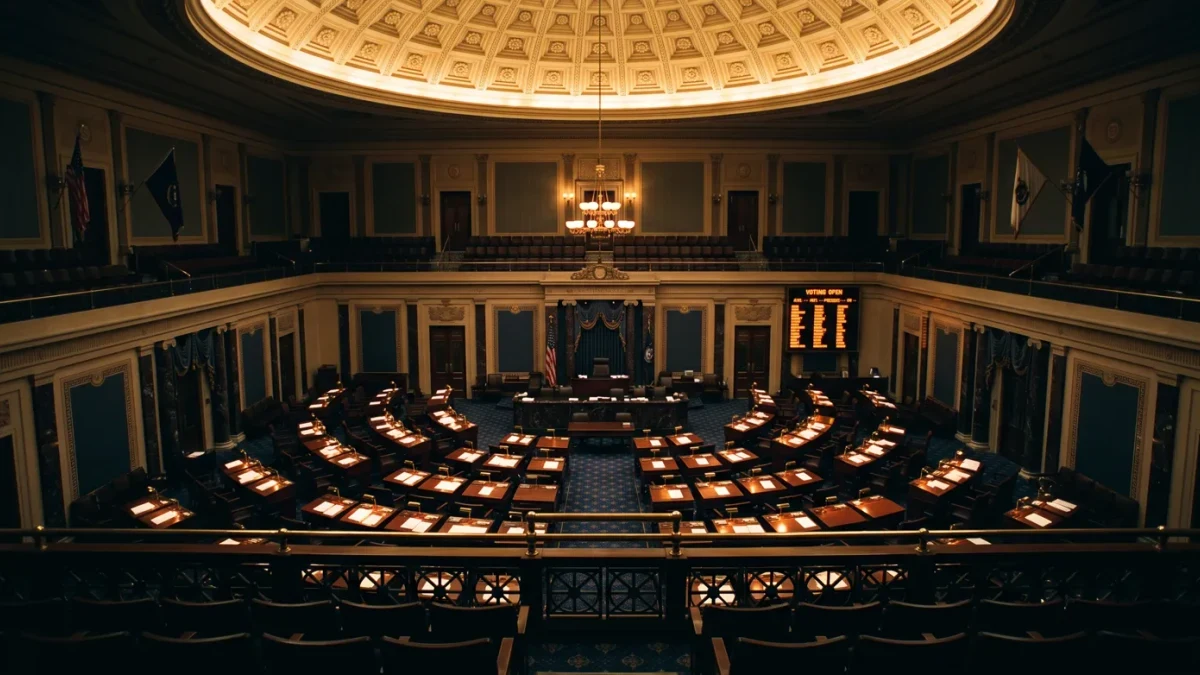
When a fiscal measure cannot get sixty Senate votes, it takes the reconciliation road — and in the tariff era, the questions reconciliation carries are exactly the ones the courts left open. Reconciliation is a budget procedure: instructions to committees, a combined bill affecting spending, revenues, and the debt limit, protected from filibuster, amendable only within strict rules. It cannot set trade policy directly. But it decides the fiscal frame around trade policy — how tariff revenue is counted, whether refund liabilities are recognized, how incentive programs for manufacturing are funded — and in a Senate where fiscal bills otherwise die, the procedure is the lane.
How reconciliation works, briefly
Both chambers adopt a budget resolution with instructions; committees produce provisions meeting them; the Budget Committees assemble a single bill; the Senate passes it by majority under the Byrd rule — the provision-policing doctrine that strikes anything not primarily fiscal, anything extraneous, anything that increases the deficit outside the instruction window. The procedure's power is its constraint: fifty votes, but only for fiscal content. Trade measures regularly test the boundary — tariff-setting by reconciliation has been attempted and generally stricken as policy rather than fiscal, while tariff-revenue recognition, duty refund appropriations, and tariffed-input tax treatment are fiscal on their face and ride legitimately.
What the tariff cycle put in the lane
Three recurring items. Revenue baselines: 2025's tariff collections were annualized into budget planning; the February 2026 invalidation and rescission of the IEEPA tariffs converted that baseline into a hole — reconciliation is where a hole gets filled, whether by replacement revenue, spending cuts, or debt-limit arithmetic. Refund liabilities: with up to $175 billion in potential refunds per Penn Wharton estimates, appropriations for repayment, or provisions shaping their treatment, are fiscal questions by definition — the eventual vehicle for whatever settlement Congress and the courts converge on. And the incentive side: manufacturing credits and program funding for the industrial build-out live in tax law, which means they live or die in reconciliation, where a fifty-vote majority can extend them and a fifty-vote majority can unwind them.
Why the Byrd rule matters to trade readers
Because it sorts trade ambition from trade fiscal effect. A provision ratifying rescinded tariffs — making the invalidated rates statute law — would arguably raise revenue and pay for the bill, giving it a reconciliation coloration; a provision restructuring Section 232 process is regulatory, and the parliamentarian would likely strike it. The sorting happens in private — the Senate parliamentarian's advisories — but the results are public in what survives. The 2026 cycles demonstrated the pattern live: fiscal provisions touching tariffs moved through budget bills while trade-procedure language moved, or died, in ordinary authorizing committees under ordinary filibuster rules.
The political economy of the vehicle
Reconciliation concentrates power in the majority's fiscal leadership — the chairs of Finance and Ways and Means write the tax and revenue text, and their positions on tariff accounting become law with fifty votes. That concentration is why trade-affected industries lobby the budget committees as intensively as the trade committees in the current era: the question is no longer only what the tariff rate is, but what the fiscal code says the tariff revenue is — real, refundable, offsettable. Members from tariff-benefit districts and tariff-cost districts fight these fights inside the same bill, which is why reconciliation seasons produce the year's clearest recorded votes on trade fiscalism.
How to watch it
The budget resolution's instructions — which committees, how much, by when — reveal the plan; the committee markups reveal the text; the parliamentarian's strikes, reported reliably within hours, reveal the boundary. For trade readers, one heuristic holds: if a provision about tariffs survives the Byrd rule, it was fiscal all along — and the fiscal provisions are where the tariff era's real settlement is being written, fifty votes at a time.