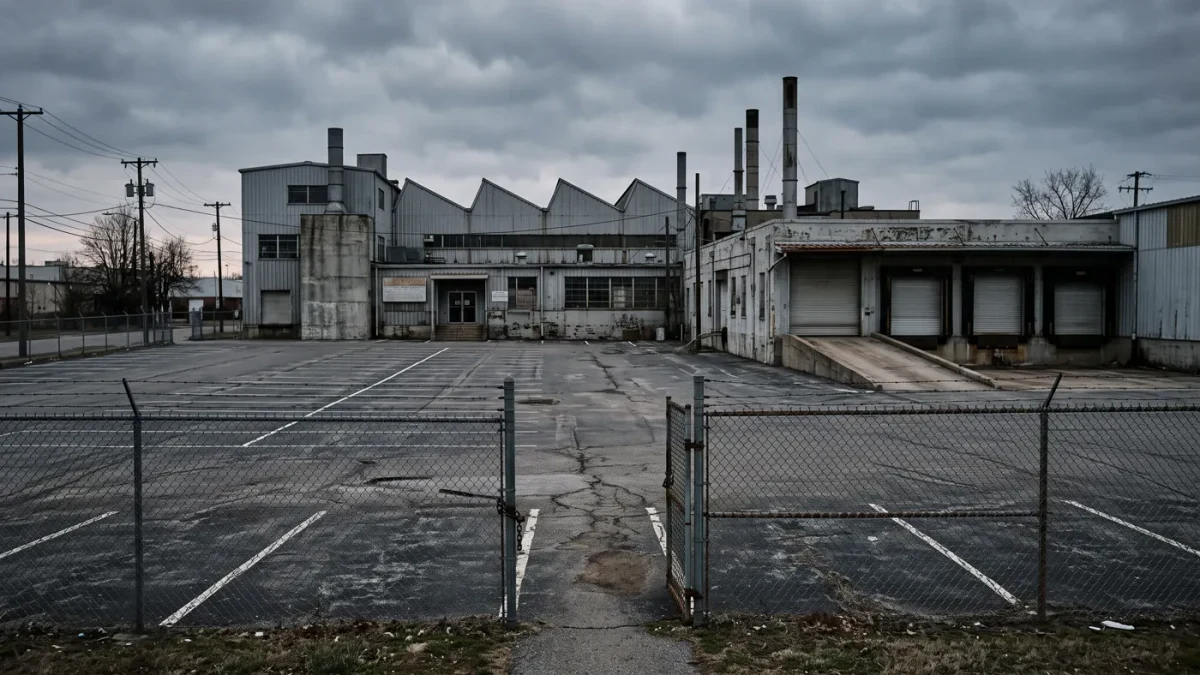
A plant closure is a multi-year event compressed into a news cycle. The announcement names a number — a few hundred jobs, occasionally a few thousand — but the economic footprint is larger than headcount, slower than the layoffs, and uneven across the town it leaves behind. The pattern from decades of closures, documented in academic and federal studies of displaced-plant communities, is consistent enough to sketch in advance.
What leaves with the payroll?
Direct wages are the floor, not the ceiling. A plant is usually among a town's larger buyers of local services — maintenance contractors, trucking, cafés, suppliers of packaging and tooling — and each of those loses revenue within a quarter. Municipal finance takes a second hit: property taxes on an industrial site fall when the facility idles, and in single-plant towns the school district budget can hinge on that one assessment. Labor-market research on displacement finds that affected workers who find new jobs often do so at lower wages for years after, with the earnings loss persisting well beyond unemployment spells.
What is the typical sequence?
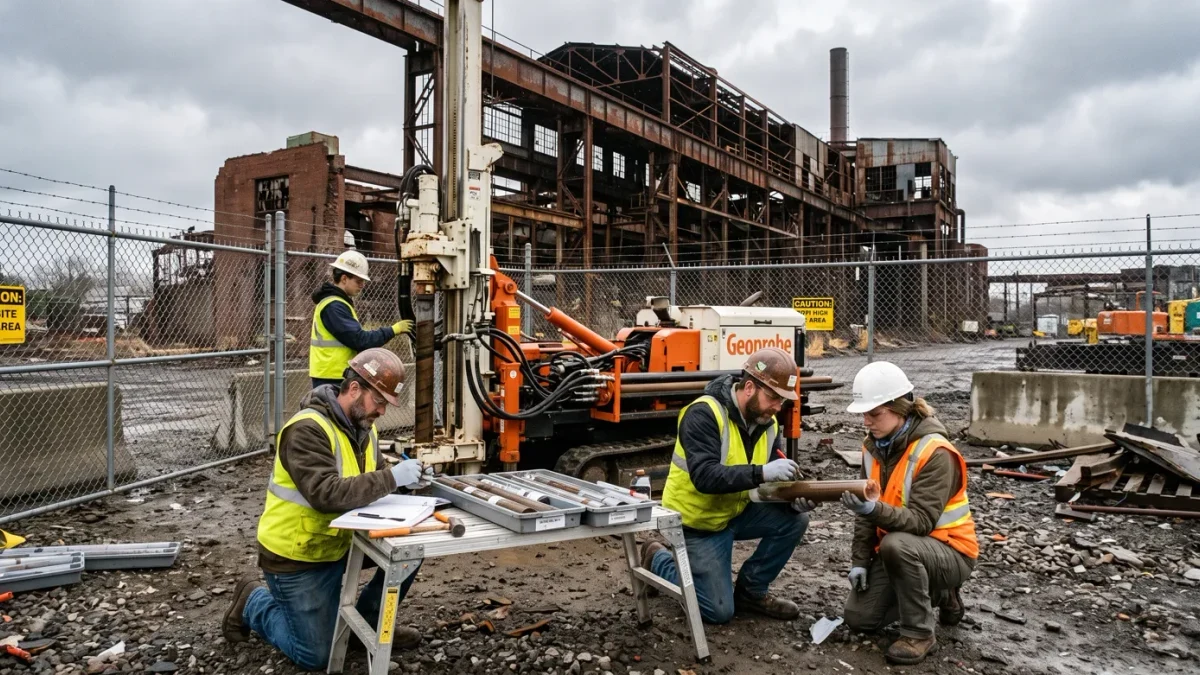
First the supply chain, within weeks — local vendors cut shifts. Then the payroll effects, through the unemployment channel, over six to eighteen months as severance runs out and job search lengthens. Then housing: plant neighborhoods see softening prices and rents as households relocate, a process that takes two to three years to bottom. Municipal budgets feel it on the next assessment cycle. If the site sells and reopens, recovery starts roughly at year three; if it does not, the site joins the inventory of brownfields that require environmental assessment and remediation before any reuse, adding cost and time that private buyers rarely volunteer for.
What determines whether a town recovers?
Three factors separate the recoveries from the spirals. Workforce portability: where plant skills transfer to nearby industries — logistics, energy, food processing — reemployment is faster. Site assets: rail access, three-phase power, and highway proximity make reuse plausible; remote single-industry towns struggle regardless of incentives. And regional dynamism: a closure inside a metro labor market is a redistribution; a closure that removes the region's anchor employer is a contraction. Federal and state programs — trade-adjustment assistance where imports are implicated, workforce grants, brownfield funding — help at the margin but arrive on grant cycles that rarely match the town's cash-flow clock.
How do you read closure announcements?
Watch the language. Announcements that cite aged equipment, product-line exits, or parent-company consolidation usually mean the site is permanently out; ones tied to a specific program or a single customer can reverse if demand returns. Check whether the company is closing capacity or moving it — a relocation implies the jobs exist somewhere, which matters for whether retraining or recruiting is the right response. And check the site: owned versus leased changes who controls the redevelopment and how fast it can happen.
Can policy soften the hit?
Modestly, and mostly on the front end. Rapid-response teams that begin retraining before the last shift, rather than after, shorten unemployment spells measurably. Site reuse moves fastest when the owner, the state, and the municipality share environmental assessment costs early. Tariff policy is often proposed as prevention, and sometimes delays a closure — but protection raises input costs for other local manufacturers, so the net for a town depends on whether it has more steel consumers or steel producers. The honest summary is that closures are managed, not prevented, and the towns that fare best are the ones that treated the plant's dependence as a risk years before the announcement.