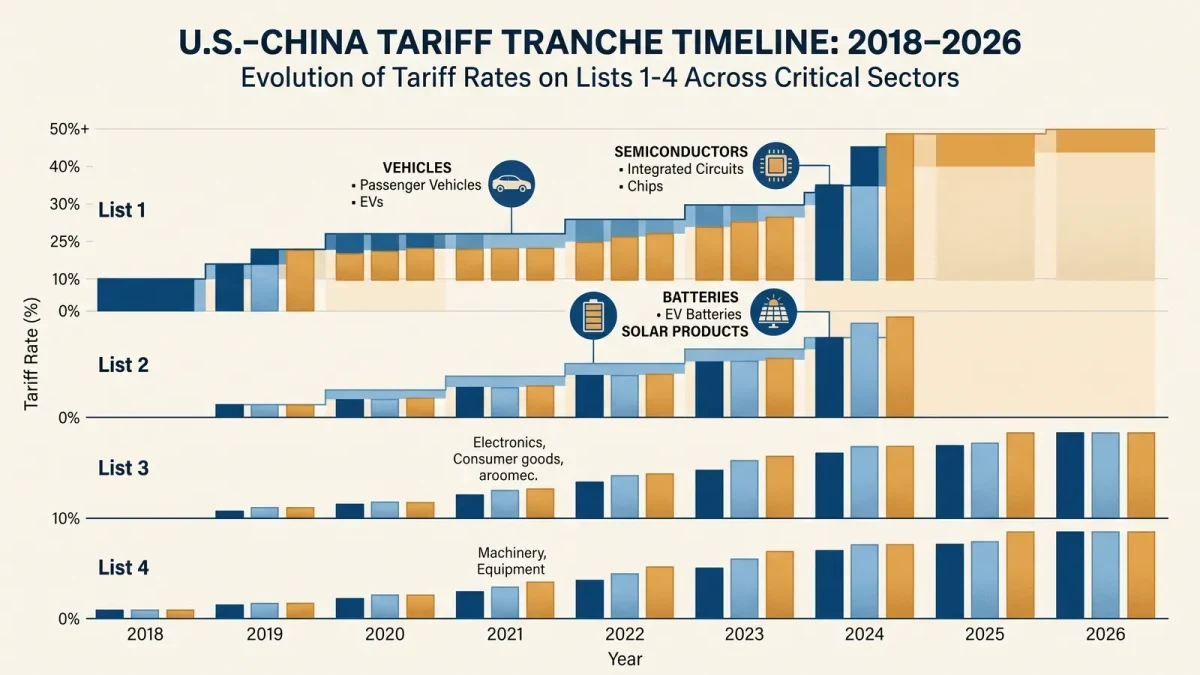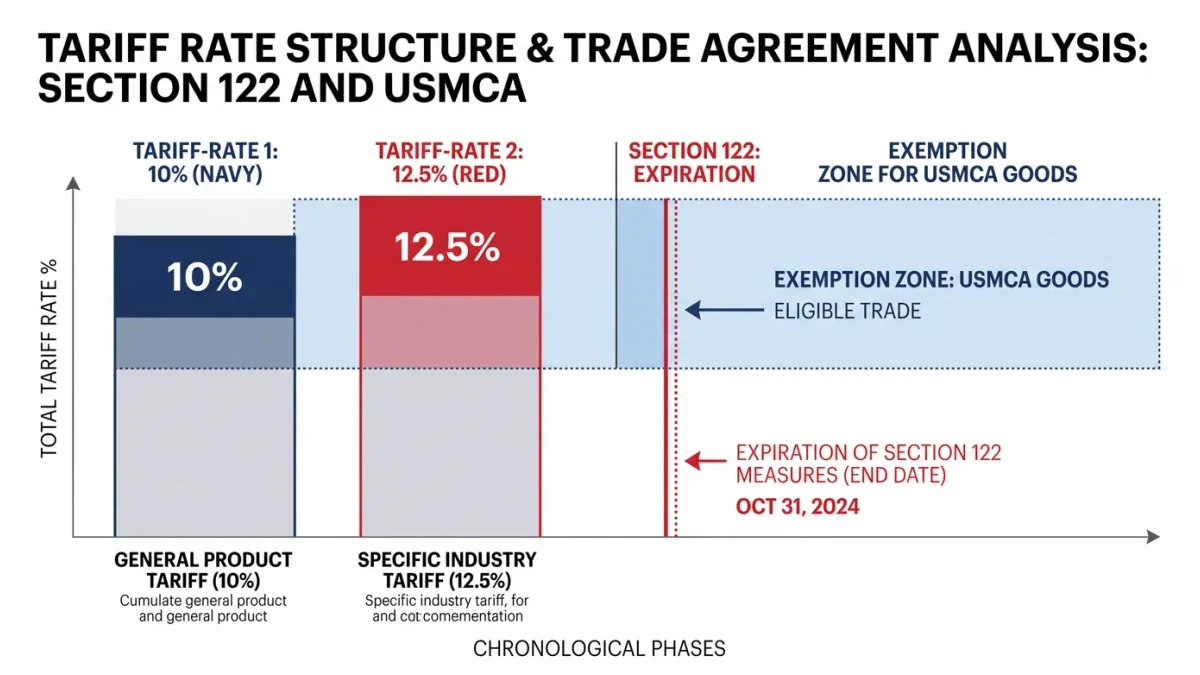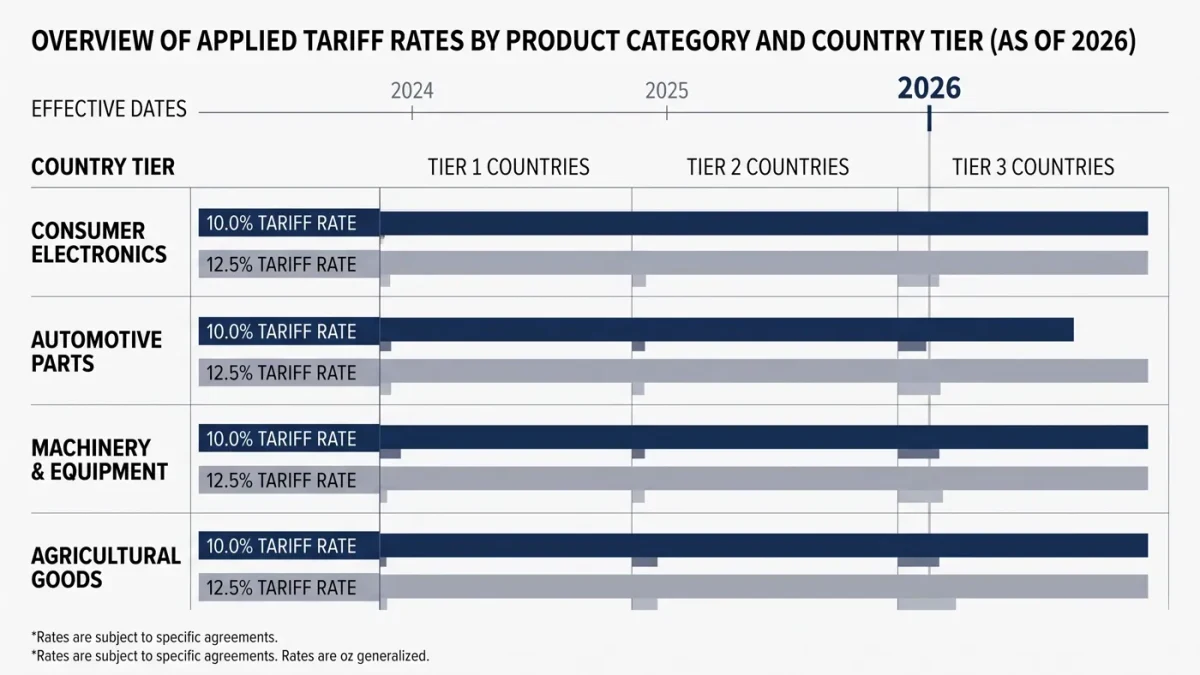
The tariff machine found its post-court gear. Additional Section 301 tariffs of 10% and 12.5% — varying by the investigated economy and product set — took effect in 2026, imposed by the Office of the US Trade Representative under the Trade Act of 1974's unfair-trade provisions, per trade-advisory summaries of the actions. The rates are lower than the headline numbers of 2025's emergency tariffs, and the legal footing is the opposite: Section 301 rests on investigation records, comment periods, and statute, none of which the February 2026 Supreme Court ruling against IEEPA tariffs touched.
What the rates apply to
The additional duties attach to product lists tied to specific investigations — the classic Section 301 structure where USTR identifies practices it deems burdensome to US commerce and matches tariff lines to them, with country-level variation producing the 10% and 12.5% tiers. Importers should treat the product annexes as the operative document: coverage is line-by-line, and neighboring tariff codes can carry different rates, a pattern the 2026 metals framework made familiar. Exclusion processes have accompanied prior 301 rounds and any new ones will follow USTR's docket.
Why this matters beyond the rates
Durability. The 2025 emergency tariffs died in court; Section 301 duties survived an earlier generation of litigation and are the mechanism most insulated from the challenges that just invalidated IEEPA authority. For supply-chain planners that reverses the planning assumption: 301 duties are likelier to persist through elections and court cycles than any emergency-proclaimed rate, so relocation economics priced against them have longer horizons. It also means the 2026 structure — metals under 232, targeted duties under 301, baseline surcharges under 122 — is the whole tariff architecture now, and each pillar has a different persistence profile.
What to watch
USTR's docket for new investigations and exclusions; the product lists' effect on import volumes in covered categories, visible in Census trade data with a one-to-two-month lag; and any partner-country responses, since 301 actions historically invite retaliation lists aimed at politically sensitive US exports. The last cycle's retaliation pattern — agriculture and manufactured goods — is the playbook counterpart importers and exporters both remember.