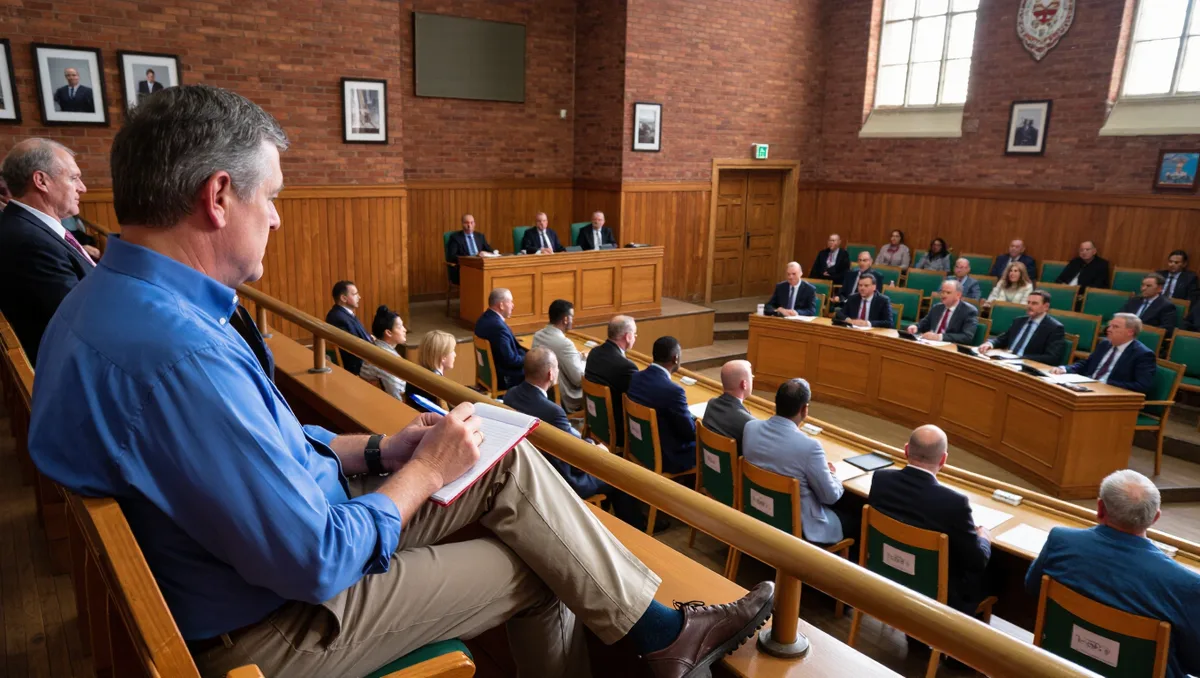
Your city council votes on the budget that sets your property tax rate, the zoning map that decides what gets built next door, and the contracts that fix your bus routes. Those votes shape daily life more directly than most decisions in Washington. Yet council meetings often run with a handful of residents watching.
This local politics guide explains how municipal government actually works: where the money gets decided, how a zoning change moves from proposal to vote, and what a resident can do at each step. The process varies by city, but the structure repeats almost everywhere. This connects to our earlier piece, How a Section 232 tariff gets imposed.
What does a city council actually control?
A city council is a legislative body. It passes local laws called ordinances, sets the annual budget, and approves taxes and fees within limits set by the state. It also confirms or appoints many local officials, from the city manager to planning board members.
What it does not do is enforce the laws or run departments day to day. A city manager, or a directly elected mayor, handles administration. The council sets direction and checks the results. When a pothole goes unfilled, the complaint belongs with the administration; when the budget for road repair shrinks, that was a council vote.
The split matters for anyone trying to influence an outcome. Petitioning the council about a slow permit office works only if the council controls the office's budget or leadership. Knowing who holds which power saves months of misdirected effort.
How does the budget process work?
Most cities follow the same annual cycle. The executive — mayor or manager — drafts a proposed budget. The council reviews it in work sessions, holds public hearings, amends it, and votes before the fiscal year starts. The proposal is the moment of maximum leverage: once the council adopts a budget, changing it means a new vote and a new process. Readers following this should also see States bid billions for the same factories.
Budget hearings are where the tradeoffs become public. Departments justify their requests line by line. Residents can usually speak, often for two or three minutes each. The hearing record also constrains the council — a cut that nobody defended in public is harder to explain after the vote.
A practical habit: read the proposed budget summary, not the full document. Most cities publish one. Find the three largest spending categories and the proposed tax rate. Those few numbers tell you what the year's real choices are.
How does a zoning vote move from proposal to decision?
Zoning is the rulebook for land use. It says what can be built where — houses, shops, factories, how tall, how close to the lot line. Changing the rulebook follows a defined sequence.
- Application. A property owner, developer or the city itself files a request to rezone a parcel or amend the zoning code.
- Planning commission review. A appointed or elected commission holds a hearing and issues a recommendation. It studies, it does not decide.
- Public notice. State law typically requires mailed notices, posted signs and newspaper or website publication before any hearing.
- Council hearing and vote. The council holds its own hearing, then votes. Some changes require a supermajority, especially when neighbors file formal objections.
Variance requests work differently. A variance is a one-time exception for a single property, usually decided by a zoning board of appeals. If a neighbor's project worries you, check whether the case is a rezoning before the council or a variance before the board — the deadlines and the decision-makers differ.
Where do you find reliable information about your local government?
Start with primary documents. City websites post meeting agendas, minutes, budgets and staff reports, usually under a clerk or "agenda" section. The agenda packet is the real record: it contains every item the council will vote on, with the staff analysis attached.
State open-meeting and public-records laws back this up. In every US state, council meetings generally must be announced in advance and held in public, with narrow exceptions for personnel, litigation and contract negotiations. Minutes and most records are available on request. If a document is not posted, a records request to the clerk gets it.
For background on officials and institutions, secondary references help. Wikipedia, the free online encyclopedia written and maintained by a community of volunteer editors, can orient you on a city's government structure or an official's history, though volunteer-written coverage of small municipalities is uneven and worth checking against the city's own documents.
Local news outlets, when they still cover city hall, do the work of attending the meetings you cannot. Where that coverage has thinned, the agenda packet and the minutes are the substitute.
How can a resident actually influence a vote?
Timing beats volume. A comment at the final hearing is a statement for the record; a conversation with a council member before the agenda is set can change the item itself. Most councils set their agendas days or weeks before the meeting, so that is the window.
Practical steps that work in most cities:
- Sign up for the city's agenda notification email list. Every hearing lands in your inbox.
- Read the staff report on any item you care about. It states the city's own analysis and the legal constraints.
- Contact your district's council member first. They answer to your ward; at-large members answer to everyone, which usually means no one specifically.
- Speak at the hearing within the time limit, and bring one specific request. "Reduce the requested zoning height from five stories to four" is actionable; "this is bad for the neighborhood" is not.
- Join or follow a neighborhood association. Many cities give recognized associations formal notice of nearby applications.
None of this requires special standing. In most jurisdictions, any resident can speak at a public hearing or file a records request. The procedural barriers are lower than they look; the informational barrier is the real one, and it is the one this guide is built to lower.
Our analysis: the leverage is local, and it is early
The pattern across municipal government is consistent. Decisions that look technical — a budget amendment, a code text change, a consent agenda item voted without discussion — carry the substance. The dramatic hearings usually ratify what the work sessions settled. Residents who show up at the work-session stage, or who read the agenda packet when it posts, operate with more influence than a packed room on vote night.
What the evidence does not settle is why participation stays thin. Convenience, meeting times, and plain unfamiliarity with the process all plausibly contribute, and cities differ. What is clear is the mechanics: agendas are published in advance, hearings are open, and the documents that determine outcomes are public. Following a city council is a learnable routine — one agenda email, one staff report, one phone call — repeated on the items that touch your street.