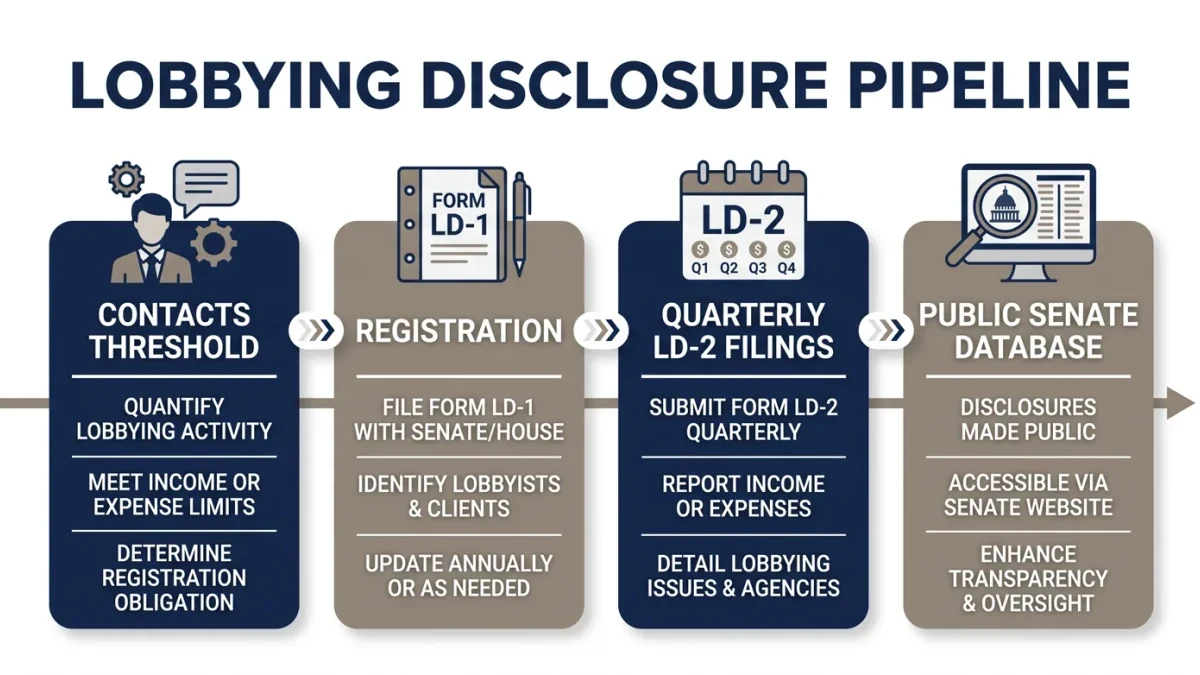
The paper trail of trade influence is public, and the tariff era filled it. Federal law requires lobbyists to register, report their clients, their issues, and their spending quarterly; the filings identify who is paying to move tariff lines, exclusion decisions, and trade-remedy outcomes — a level of specificity that makes the lobbying database one of the best open windows into economic policymaking. Reading it is a skill worth an afternoon: the pattern of who lobbies on what, and when, maps the tariff regime's real distribution of winners and losers as faithfully as any economic study.
What the law requires
The Lobbying Disclosure Act covers paid advocates who make multiple lobbying contacts on behalf of clients: registration within tight deadlines, quarterly reports listing issues lobbied — including specific bill numbers and, importantly for trade readers, tariff matters identifiable by statute and investigation — plus income bands for hired firms and, for in-house lobbyists, expense bands. The Honest Leadership and Open Government Act tightened things further: lobbyists' campaign contributions tracked, disclosure of previously covered official positions, and penalties that turned sloppy filing from a style problem into a legal one. Foreign agents file separately and more extensively under FARA — the statute that caught several trade-adjacent scandals — when representing foreign principals.
What the trade files showed in the tariff era
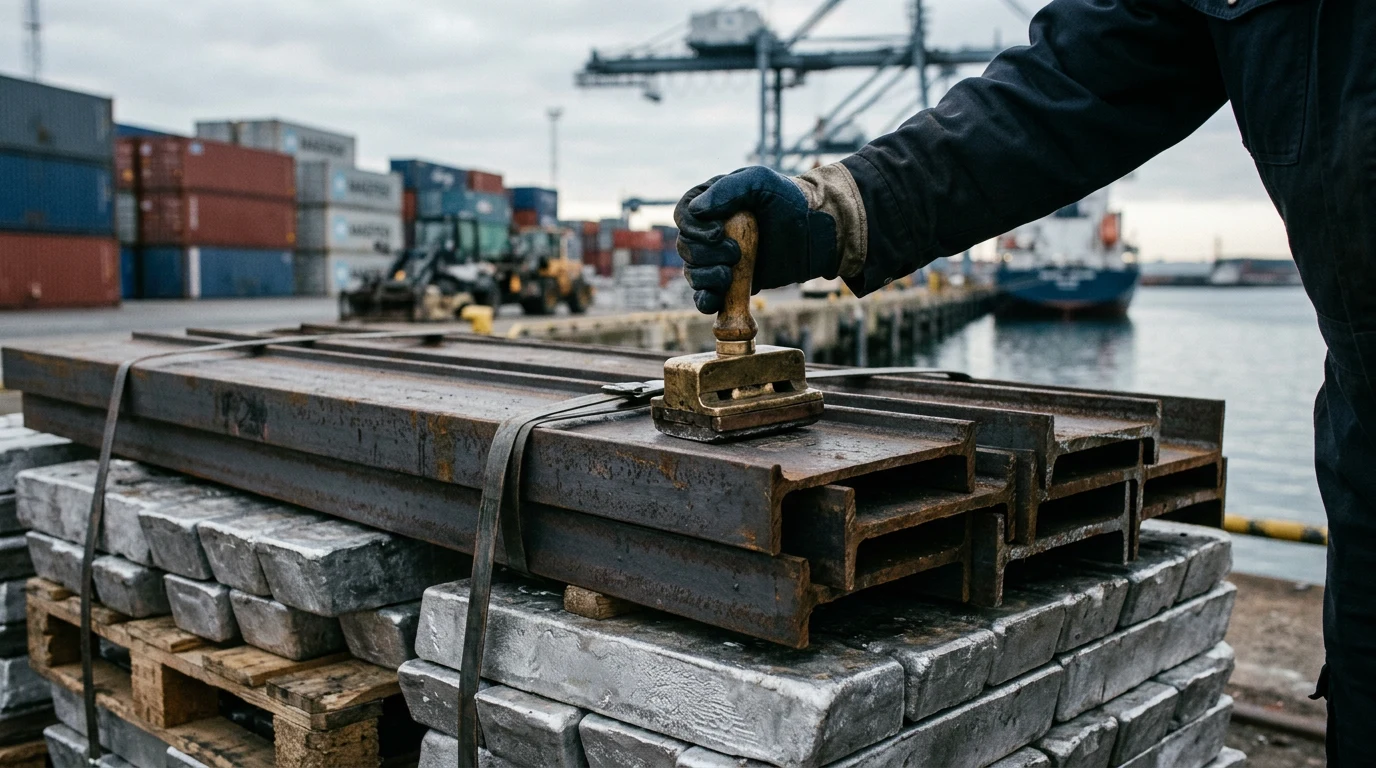
Volume and alignment. Registration counts on trade issues climbed with each escalation round of 2025, and the coalitions split along the line economics predicts: producer-side industries — metals, some agriculture — organized for protection, while import-dependent retail, technology, and manufacturing sectors organized against, often through multi-client coalitions that file jointly. The exclusion process generated its own specialized practice — firms lobbying on individual product exclusions, a micro-targeting form that trade lawyers and lobbying shops built into a service line. And the state dimension grew: foreign governments and sub-national interests lobbying on tariff treatment, visible in FARA filings that spiked with each threat to their export sectors.
How to read a filing usefully
Three disciplines. Follow the issue codes and specific matters: a filing that names a Section 232 investigation or an exclusion docket tells you the precise decision at stake, and the client list tells you who cares. Watch timing against the policy calendar: registrations cluster before comment deadlines and committee markups, so the filing date is intelligence about which decisions were seen as live. And aggregate: one company's filing is anecdote; a quarter's filings across an industry are a map of perceived stakes — when both the producers and the buyers of a commodity register in the same quarter, a fight has arrived, and the committee calendar will confirm it.
The limits of the regime
Honest ones. The disclosure thresholds exempt a layer of influence: lobbying below the time and contact thresholds, grassroots campaigns, and the policy consultation that happens through advisory committees rather than paid advocacy. Income bands obscure magnitudes. And the revolving door is disclosed but not restricted: former officials' re-registration as lobbyists of their old portfolios is legal, visible in the filings' employment-history fields, and central to how Washington actually works. The database tells you who paid to be in the room, not what happened in the room — for that, the Federal Register docket and committee transcripts do the work.
Why it matters now
Because trade policy's post-2026 reconstruction runs through exactly the decisions this regime documents: the replacement statutes Congress drafts, the refund settlement's shape, the incentive programs' funding. Each will generate a filing wave that previews the coalitions before the votes. The public file is the cheapest opposition research a citizen, journalist, or business can do — assembled by legal mandate, updated quarterly, and waiting.