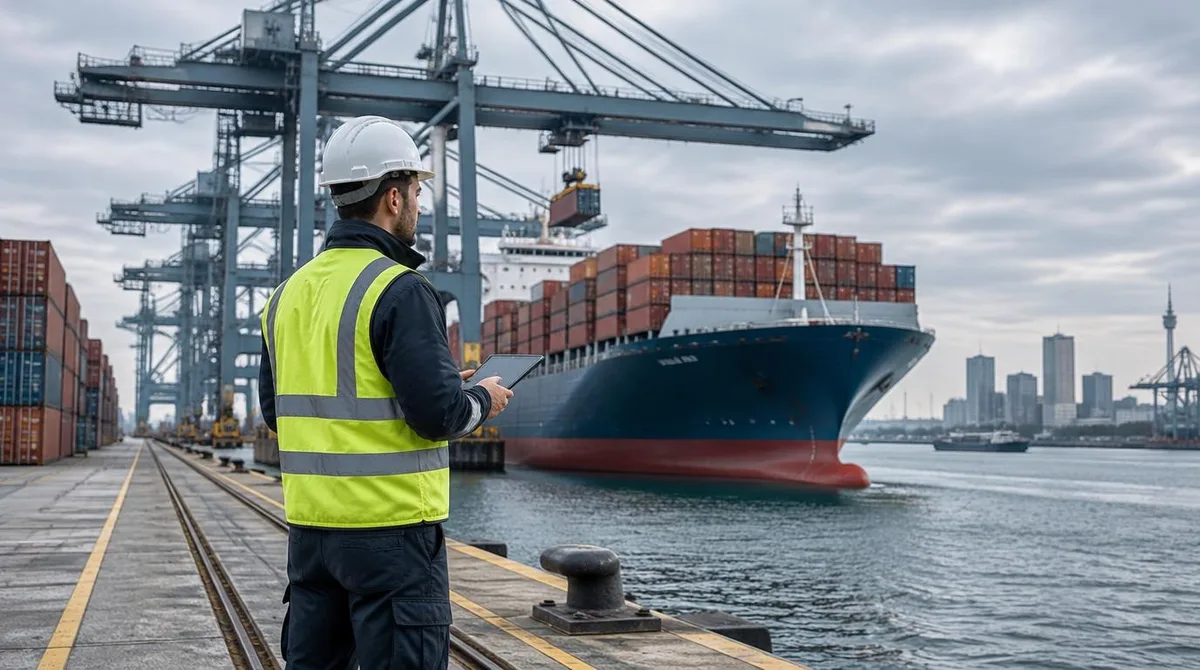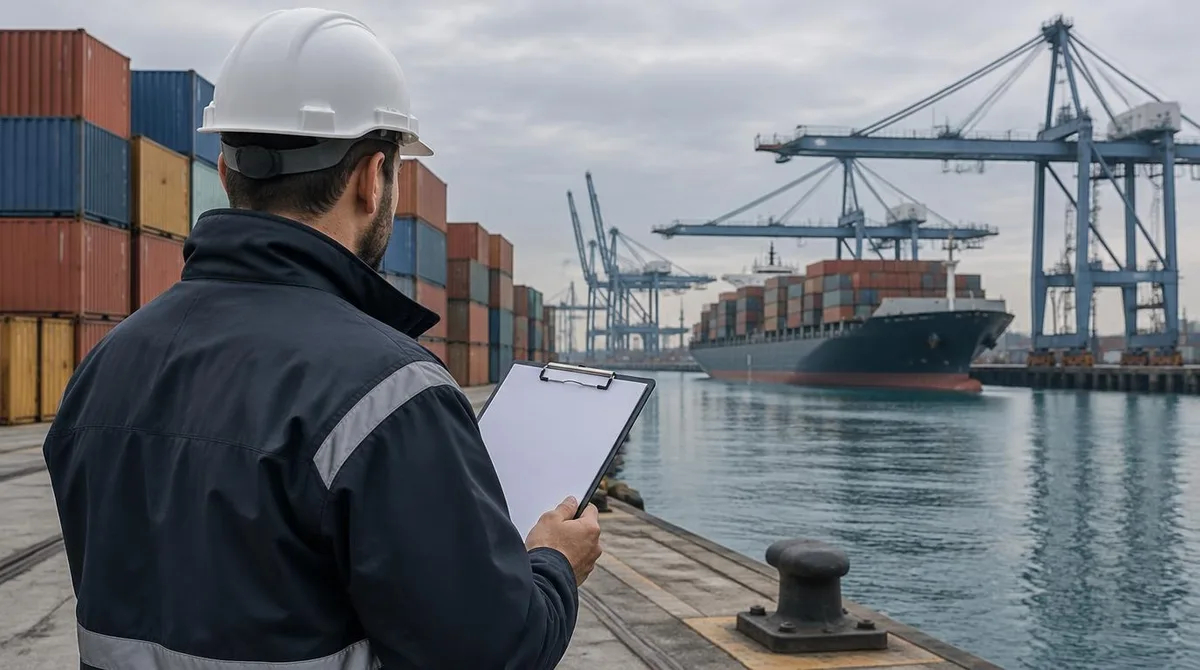
Supply chain management has shifted from a cost discipline to a risk discipline. Firms that spent two decades squeezing the cheapest lead time out of one long supply line are now paying for a second option they hope never to use. The work still looks ordinary — supplier lists, freight bookings, inventory levels — but the questions behind it have changed.
The core of supply chain management is simple: get the right goods to the right place at the right time, at a cost the business can absorb. What changed is the definition of "right." A supplier that wins on price alone can lose everything if a tariff ruling, a port closure, or an export ban cuts the line for a month.
What does supply chain management actually cover?
It covers the full path a product takes from inputs to the customer: where raw materials come from, who processes them, how they move, where they sit, and who pays at each step. The economics underneath are old. According to Wikipedia's overview of supply in economics, the quantity a seller offers depends on the good's own price, production costs, technology, expectations, and government policy — and each of those factors can move a firm's supply curve. A tariff is a government-policy input. A shipping delay is a production-cost input. Supply chain management is the operating practice of watching both.
That is why the field borrows from economics more than most managers admit. A change in input prices shifts what suppliers are willing to offer at any given price. A change in expectations — say, an anticipated tariff increase — shifts behavior before anything official happens, as buyers and sellers front-run the rule.
Why did disruption move to the center of the job?
Because the cheap, single-source model proved fragile. When one region dominates production of a component, any local shock — a policy change, a natural event, a labor dispute — becomes a global shortage. Firms learned that the lowest-cost supply line carries a hidden premium: the cost of being unable to ship anything when it fails.
Tariff policy sharpened the lesson. Duty rates can change faster than supply contracts can. A firm that signed a multi-year sourcing deal at one tariff assumption can watch the landed cost of its product jump between two order cycles. As Geektonight's explainer on supply determinants notes, taxation policy and transportation conditions are standing constraints on what suppliers can offer — and both sit squarely inside the tariff and logistics questions firms now face.
The result is that supply chain management now reports to strategy, not just procurement. Sourcing decisions get weighed against policy risk the way they were once weighed only against unit price.
How are firms building resilience without breaking the budget?
Most resilience strategies reduce to a few moves, and each has a price tag:
- Dual sourcing. Qualify a second supplier, often in a different country, even if it costs more per unit. The premium buys an option.
- Reassessing inventory. Holding buffer stock costs money and warehouse space, but it converts a supply gap into a waiting problem instead of a shutdown.
- Shorter or nearer lines. Moving final assembly closer to customers trims exposure to long transit routes, though it rarely removes dependence on distant inputs.
- Contract design. Firms renegotiate terms so tariff changes, currency swings, and delay penalties are shared rather than absorbed by one side.
None of these is free, and that is the honest trade-off. Resilience spending shows up as slightly higher unit costs in good years. It pays for itself only in bad ones — which is exactly why many firms skipped it until recent years forced the issue. Our analysis: the firms adapting fastest treat resilience spending like insurance, priced and reviewed annually, not like a one-time project.
What role is technology playing?
Two roles, and they differ. The first is visibility: software that tracks orders, shipments, and supplier status so a disruption is discovered in hours rather than weeks. Better data does not prevent a disruption, but it shortens the reaction time, which is often what separates an inconvenience from a lost customer.
The second is automation inside plants and warehouses. When labor or input costs rise, firms look at whether machines can hold output steady. Automation has its own economics — it front-loads capital and pays back over time, a trade-off covered in more detail in how automation pays back on the second shift. Technology adoption in the supply chain follows the same logic: it is a bet that stability is worth the upfront spend.
What technology cannot do is remove policy risk. A dashboard can show a tariff-driven cost increase the morning it lands. It cannot negotiate the tariff away or find a substitute supplier that was never qualified.
Who carries the heaviest burden when disruption hits?
Small firms, usually. A large importer has purchasing leverage, alternate suppliers on file, and cash reserves to ride out a bad quarter. A small importer often has one supplier, thin margins, and no room to pre-buy inventory. When costs jump, the small firm either raises prices — and risks losing customers to bigger rivals — or absorbs the hit and burns cash.
That asymmetry shows up across the coverage of this beat. Small importers carry the tariff burden hardest, supplier diversification has a real price that smaller balance sheets feel first, and uncertainty itself acts as a tax on investment decisions, as we've covered in uncertainty is the tax on top of the tax and in supplier diversification has a real price.
For a small firm, the practical steps are narrower but real: know exactly which inputs cross which borders, keep one qualified backup supplier even if it is rarely used, and put tariff scenarios into pricing conversations before a rule changes, not after.
What this means for the next few years
The evidence points one way: supply chain management has permanently added a second objective. Cost still matters. But firms now optimize for cost and for the ability to keep shipping when policy or geography intervenes. That dual objective raises baseline operating costs and rewards firms with better data, deeper supplier benches, and more flexible contracts.
What remains unknown is how far the rebalancing goes. If tariff policy settles, some firms will drift back toward single-source efficiency and pocket the savings. If it stays volatile, the resilience premium becomes a permanent line item — and the suppliers who can offer flexibility, not just low price, will be the ones who keep the contracts.