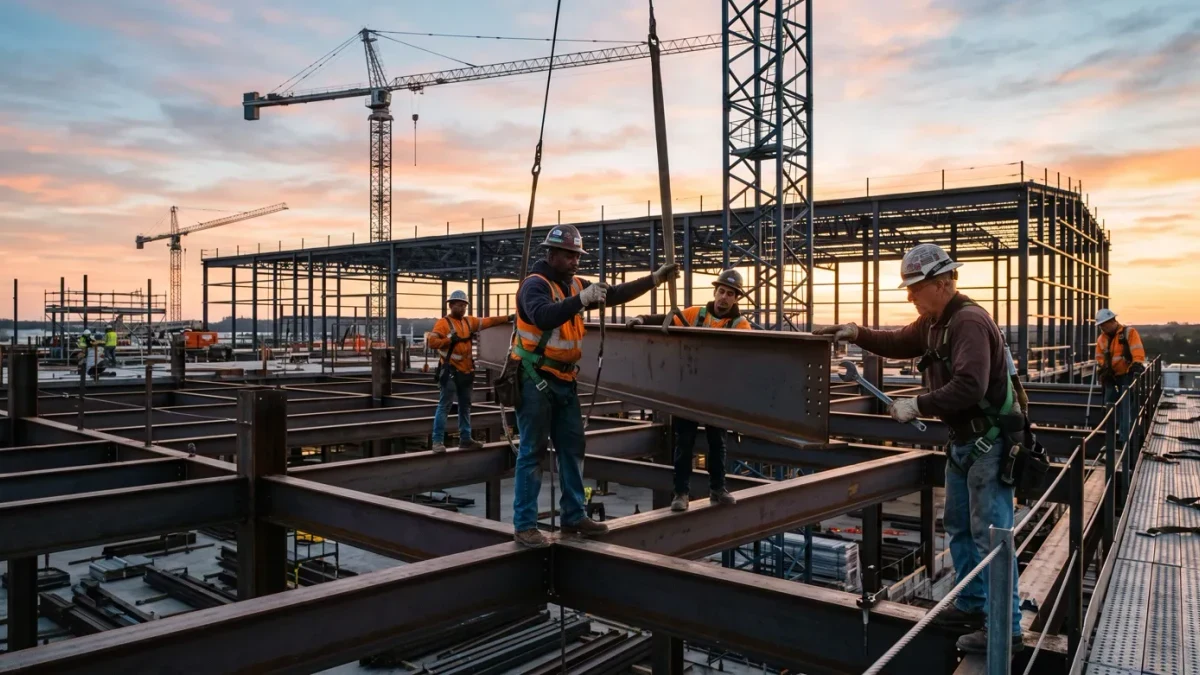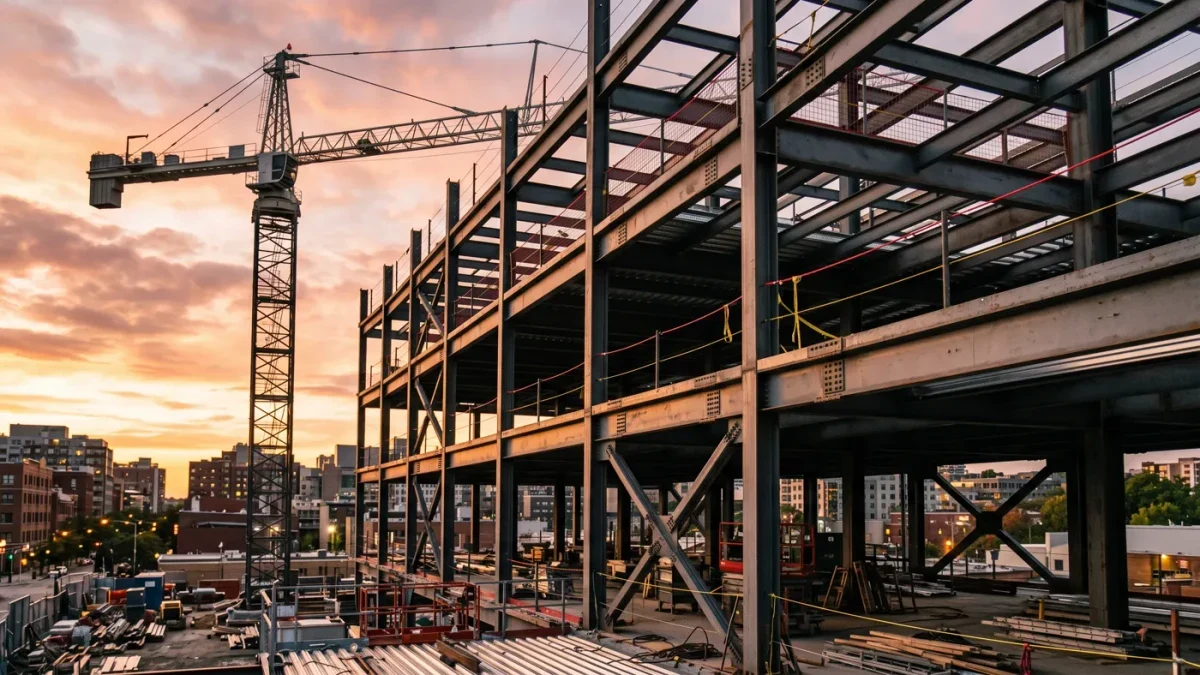
Steel is a small line on a project's cost sheet that moves a large number: total bid. Structural steel, rebar, and metal decking run a mid-single-digit share of typical commercial construction cost, but steel-price swings of the magnitude the tariff era produced pass through bid pipelines with multipliers — delayed, diluted, and distributed across contractors, developers, and owners in ways each remembers at renewal time. The 2025-2026 metals regime, with rates as high as 50% before the 2026 restructuring cut certain rates to 15%, produced exactly the premium environment construction estimators had learned to dread.
Where the premium comes from
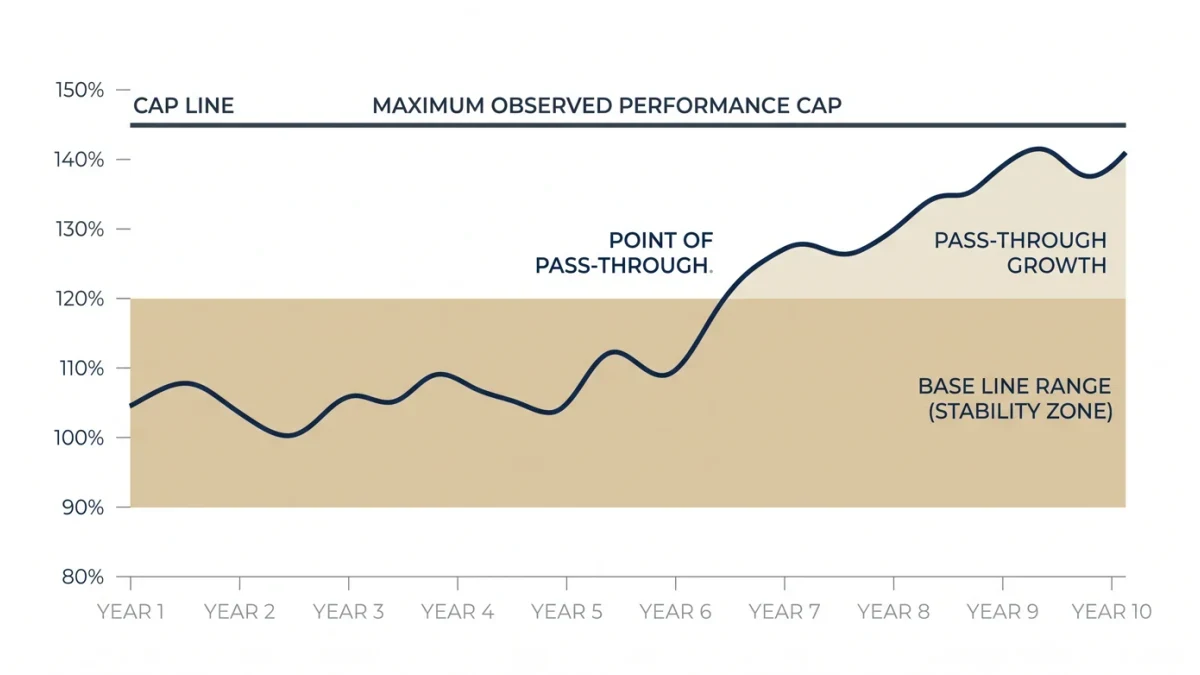
Tariffs raise the import price floor; domestic prices rise toward it. The mechanism is not mysterious — when imported steel costs 25% more at the border, domestic mills gain pricing room without losing orders, and benchmark domestic prices lift. Fabricators buy mill or imported product; their quotes to contractors move within weeks of mill-price moves; contractors' bids to developers move at bid cycle; and the owner sees the total at award. The pipeline explains the lag: a premium created by a proclamation in one quarter surfaces in project budgets two quarters later, by which time the rate may have changed again — the estimation problem the 2026 proclamations created with their differentiated product-rate structure, per the Federal Register texts.
Who absorbs the increase?
Contractually, whoever signed the risk. Fixed-price bids with material escalation caps push the risk to contractors — and steel-price spikes have bankrupted mid-size fabricators and GCs in past cycles, the construction industry's recurring object lesson in why escalation clauses exist. Cost-plus contracts leave it with owners, who discover the premium at each draw. Unit-price contracts with material-adjustment indices share it by formula. The 2025-2026 cycle's volatility made the clause language the money: projects bid during the escalation with escalation protection priced materially differently from those without, and litigation over what counted as tariff-driven escalation followed where contracts were silent.
What can be done at the project level
The toolkit is standard and effective when used early. Escalation clauses with defined indices — tying adjustment to published steel benchmarks rather than supplier invoices — allocate risk without litigation fuel. Early procurement: buying mill parcels at design-development rather than construction-documents stage locks prices ahead of rate changes, the project-level version of front-running. Substitution engineering: value-engineering steel-intensive elements toward optimized sections, mixed materials, or modular approaches converts a price problem into a design opportunity. And sourcing diligence: domestic-exclusion and alternative-origin options exist within the tariff architecture — the product annexes mean neighboring codes can carry different rates, and estimators who read them save real money.
The demand side is moving too
Construction's steel demand is meeting an industrial-policy expansion — manufacturing-plant construction running far above its historical trend since 2021 per Census construction-spending data, absorbing fabricated metal and structural capacity. The competition for fabrication slots lengthens lead times independent of price, so the premium shows up as schedule risk as well: a project that cannot lock a fabricator's slot carries its escalation exposure longer, compounding the price exposure. Estimators now track fabrication backlogs the way they track commodity indices.
The honest read for 2026
The July 2026 rate reductions on certain metals will ease portions of the premium with the usual lag — through fabricator quotes first, bid totals a cycle later — while the framework's 2027 end-date keeps the whole structure revisable. For anyone budgeting steel-intensive work, the working assumptions are three: premiums persist where rates do, lead times are part of the price, and the contract clause is the hedge. Steel's share of cost is small; steel's share of surprises has not been.