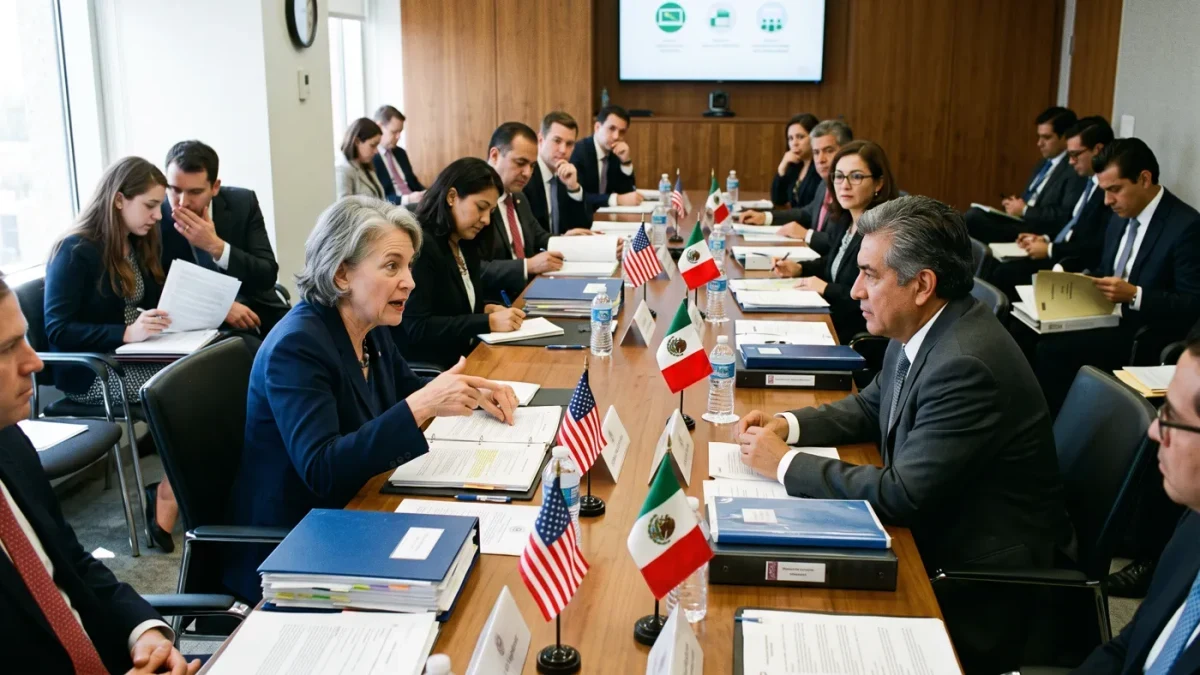
The trade deal that governs North American manufacturing is officially under revision. American and Mexican negotiators launched a third round of bilateral USMCA discussions in July 2026, per trade-law trackers following the negotiations, continuing a review process that will effectively re-price the region's supply chains. Canada participates on parallel tracks after the early bilateral sequence, and the topics on the table are the ones industry expected: rules of origin, tariff interaction with the 2026 metals and Section 301 regimes, and the region's share of critical-input production.
Why the review matters more than usual
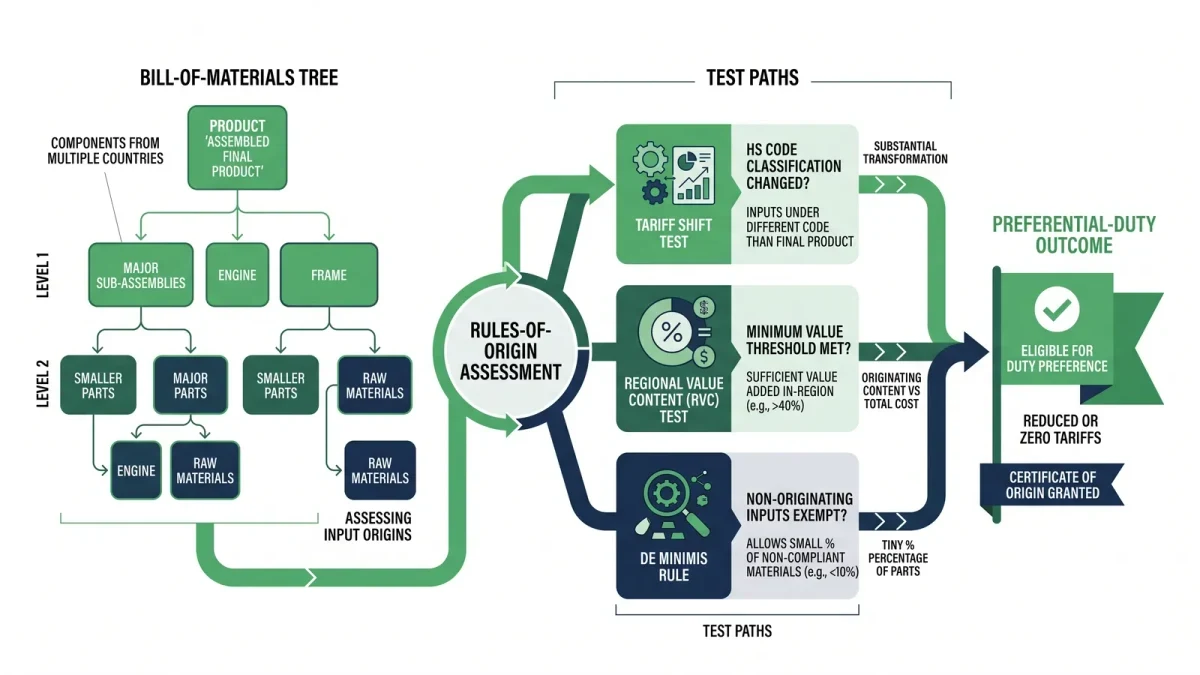
USMCA's preferential treatment is conditional: products qualify only if they meet regional-content thresholds, and the thresholds are what the talks can move. The current auto rules require high North American content plus wage provisions for qualifying vehicles and parts. Tightening them pushes more component production into the region — the policy goal — but raises assembly costs at exactly the moment metals tariffs have already inflated input prices; loosening them rewards the assembly-relocation pattern where Mexican plants assemble Chinese components. For automakers and appliance makers with Monterrey-to-Midwest corridors, the delta between scenarios is measured in percentage points of landed cost on every unit.
The tariff overlay
The talks intersect a live tariff architecture: Section 232 metals tariffs with differentiated 2026 rates, the new 10%-12.5% Section 301 duties, and the post-IEEPA legal terrain after February's Supreme Court ruling. USMCA preferences are the counterweight that keeps much of the corridor's trade duty-light, which is why the negotiation's outcome will do more to shape North American sourcing than any single tariff proclamation this year. Industry's ask, voiced consistently through comment channels: whatever the rules, make them stable — the corridor's investment pipeline is being priced against political risk that firms say they cannot underwrite.
What to watch
The rounds' cadence and the scope of what leaks: rules-of-origin percentages, any wage-threshold changes, and whether critical-minerals provisions join the text. Watch also the reaction of Asian suppliers to the corridor — a tightening rule of origin is an invitation to build components in North America, and groundbreaking announcements tend to follow the text, not precede it. The formal review clock matters less than the political one: negotiators are working toward outcomes that can be ratified before the 2026 US election cycle consumes the calendar, which makes the autumn rounds the ones that count.