The busiest customs line in America closed in 2025. For decades, shipments valued under $800 entered duty-free under the de minimis exemption — a rule meant for travelers' souvenirs that became the backbone of direct-from-China e-commerce. The exemption ended for all countries in August 2025, and the consequences are still working through logistics networks, customs staffing, and the business models of the platforms built on it.
What was de minimis, and why did it matter?
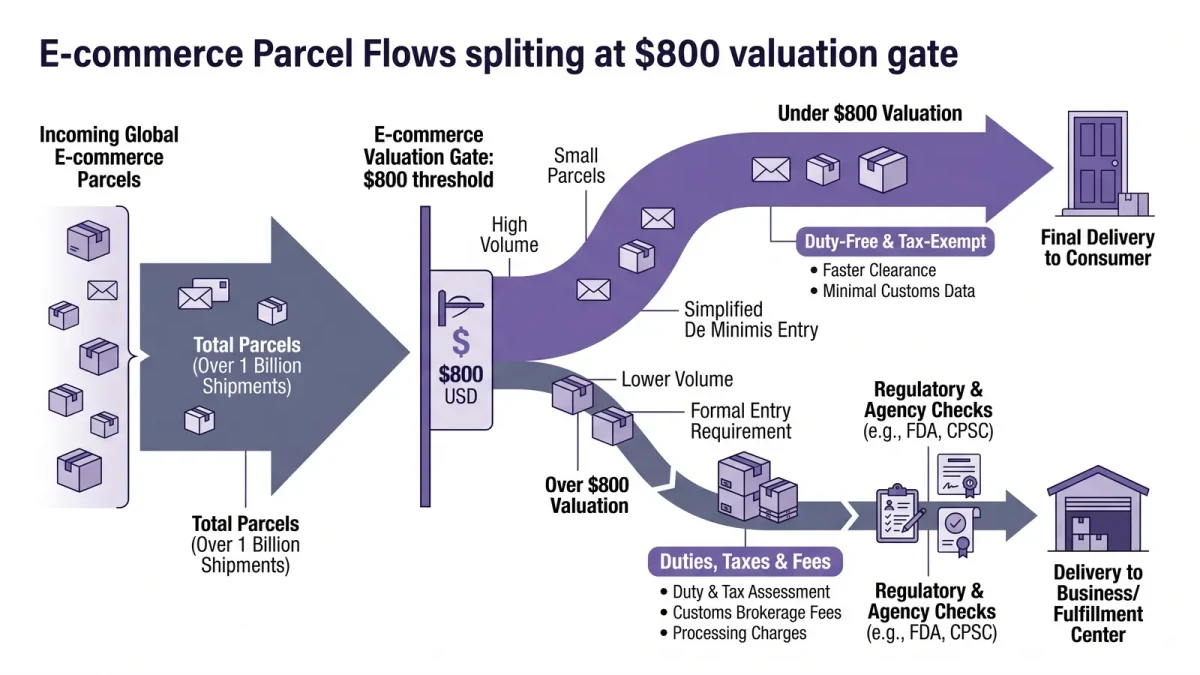
Section 321 of the tariff statute allows duty-free entry for low-value shipments, with the threshold raised to $800 in 2016. Parcel volumes grew past a billion shipments a year, driven by e-commerce marketplaces shipping individual orders directly to consumers. Each parcel entered without duty and with minimal data. That made it both a competitive weapon — importers routing parcel-by-parcel avoided tariffs that bulk importers paid — and, in the view of lawmakers and enforcement agencies, a gap in origin, safety, and enforcement controls. The 2025 orders ended the practice first for China-origin goods, then universally, per Customs and Border Protection guidance.
What replaced it?
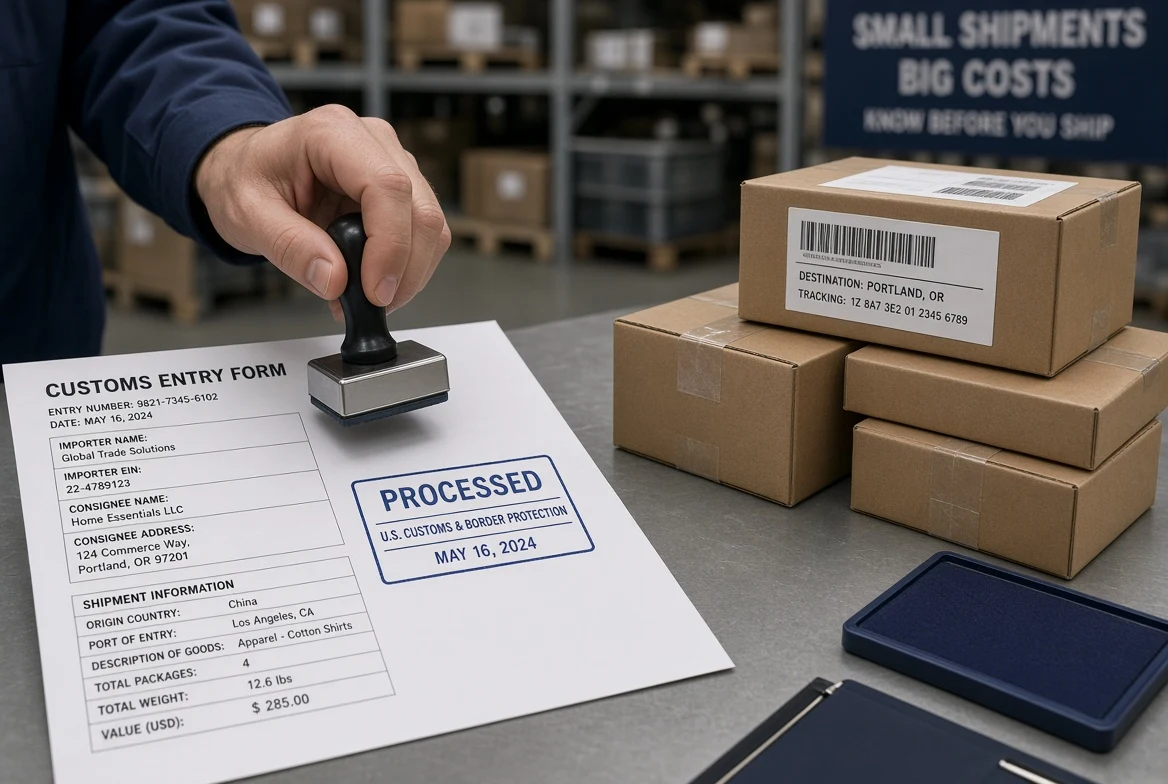
Formal or informal entry with duties paid, like everything else. The administration has since pursued a framework for handling low-value commercial shipments with streamlined procedures and a duty surcharge structure on certain postal parcels, but the core change stands: no more duty-free lane. Importers adapted in three visible ways. Consolidation — orders now batch into larger, fewer entries through hubs. Localization — platforms moved inventory into US warehouses ahead of purchase, converting international parcels into domestic fulfillment. And price pass-through — duties, fees, and brokerage costs landed on order values, the mechanism pass-through research would predict.
What broke at the border?
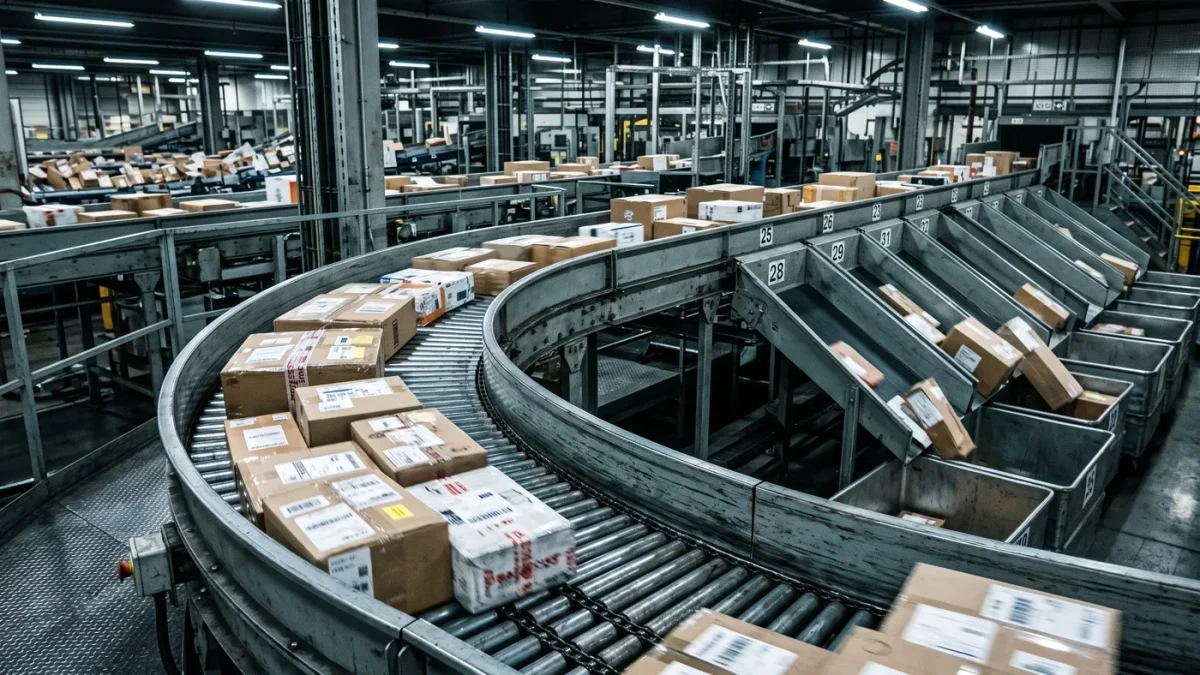
Volume logistics. Customs entry processing, broker capacity, and international mail and express networks were sized for a flow that included a billion light parcels a year. The agencies expanded staffing and the express carriers built pre-entry duty calculation into their checkout integrations, but the first months showed congestion and slower parcel delivery on affected lanes, per carrier disclosures. Fraud adapted too: undervaluation and split shipments — the classic responses when exemptions carry thresholds — became enforcement priorities, and penalties follow manifest accuracy failures.
Who won and who lost?
Domestic warehousing and fulfillment won: if parcels pay duty anyway, holding inventory in the US gains appeal, and industrial-leasing data through late 2025 showed demand consistent with that shift. Bulk importers gained competitive symmetry — the parcel loophole they competed against is closed. Low-margin direct-shipping marketplaces lost margin and speed. Small importers using parcels for samples and replenishment lost a genuine convenience and now carry entry costs that are proportionally heavy on small shipments — the reason trade lawyers keep proposing a restored, tightly policed low-value lane.
What should a small e-commerce seller do now?
Treat every international movement as an entry: classify products under the Harmonized System, calculate landed cost including duty and brokerage, and decide between consolidated bulk import into a US warehouse versus per-order entry arithmetic. Keep valuation documentation defensible — customs may ask, and the answer is an invoice, not an opinion. And watch the rulemaking: the streamlined low-value framework remains under development, and its final shape will set the cost floor for small-parcel trade going forward.
News ABC publishes information, not customs advice.