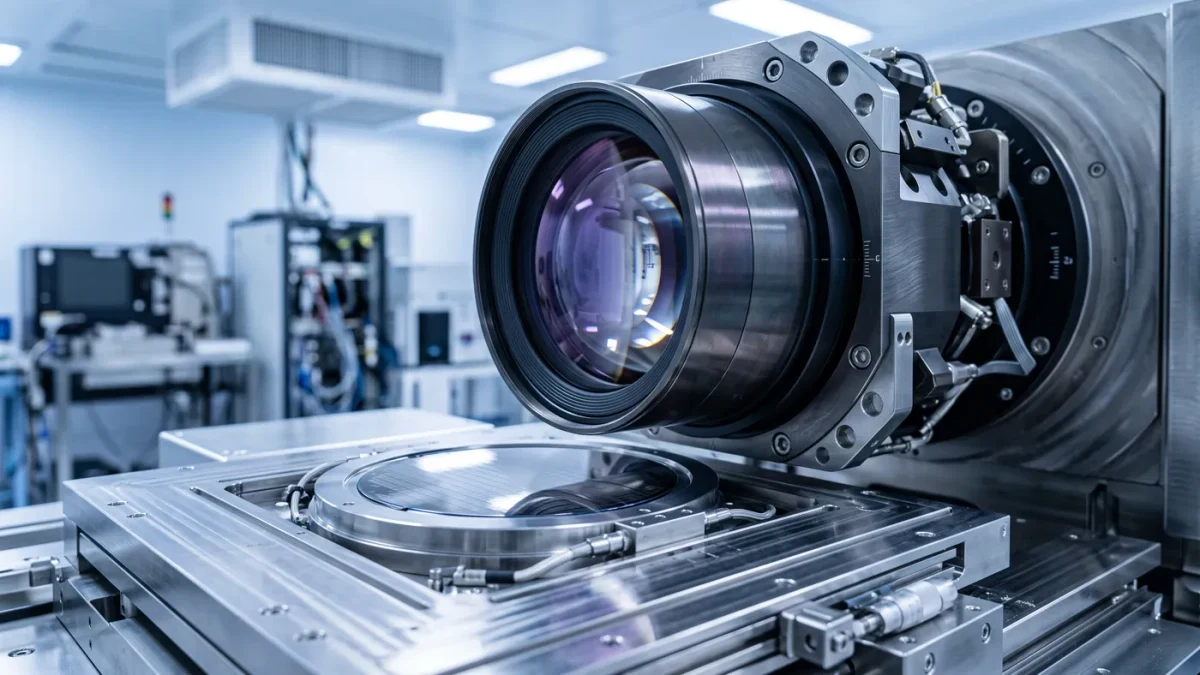
Export controls have become the sharpest tool in technology trade policy. Since 2022, the United States has restricted the export of advanced semiconductors, the equipment that makes them, and the software and know-how that designs them, aiming to keep leading-edge computing capacity out of rival militaries. The rules read like engineering documents — transistor densities, memory bandwidth, lithography wavelength — because they are. The thresholds decide which chips ship freely, which need licenses, and which cannot go at all, and both chipmakers and national governments now plan capital around them.
What is controlled, and how?
The Commerce Department's Bureau of Industry and Security administers the Export Administration Regulations, which place items on control lists by technical parameter. For semiconductors, the measures target advanced logic and memory performance thresholds; for manufacturing equipment, the specific process capabilities of tools like lithography systems; for design, electronic design automation software with leading-edge features. Separate from item controls are end-use and end-user rules — restrictions on activities of certain entities and on destinations, with license requirements or presumptions of denial. Exporters are responsible for knowing their customer, and enforcement cases turn on what the exporter knew or should have known.
Who else enforces controls?
Nobody enforces US law abroad — but alignment has grown. The Netherlands and Japan, home to the leading lithography and deposition toolmakers, imposed their own restrictions on advanced equipment exports, closing the alternative supply the original US rules left open. The coordination is deliberate: controls leak wherever a sole-source supplier sits outside them, so the effective regime is the intersection of national rules, negotiated through diplomacy and periodically adjusted. Multilateral export-control forums provide the venue, but the pace is set by bilateral agreements.
What are the economic effects?
Three-layered. For the controlled firms — primarily the leading US tool and chip designers — the restrictions cut revenue from one of the world's largest chip markets, a hit acknowledged repeatedly in company filings, which also note enforcement-compliance costs. For China's semiconductor sector, the controls act as a forced-substitution program: state-directed investment has poured into mature-node capacity and domestic alternatives, and China's share of legacy-chip output has climbed, raising a second-order concern among US allies about dependence on Chinese mature nodes. For the global industry, the split creates parallel supply chains — qualified customers get leading-edge supply, restricted markets build their own — at efficiency cost borne everywhere.
How do the rules keep changing?
Through rulemakings and entity-list actions, each responding to workarounds. Chips redesigned to sit just under performance thresholds prompted threshold adjustments; cloud access to restricted computing prompted rules on infrastructure providers; third-country transshipment prompted expanded country coverage and the foreign direct product rules that reach goods made abroad with US technology. Companies treat regulatory monitoring as a cost of doing business, and the compliance function — screening customers, tracking end use, documenting diligence — has grown accordingly.
What should manufacturers outside the chip industry know?
That the logic is spreading. The same architecture — technical thresholds plus entity lists plus end-use rules — now appears in controls on advanced computing, quantum technologies, and biotech tools, and in tariff policy's product annexes. A machinery maker whose product contains a controlled component, or whose customer appears on a list, inherits a licensing question. The practical disciplines are unchanged from customs work: know your product's classification, know your customer, and keep the file. In trade policy, the file is the strategy.